Morning, July 30

Morning, July 30, edited from Spurgeon’s Morning and Evening

“And he began to weep.” — Mark 14:72

It has been thought by some that for the rest of Peter’s life, the cascade of his tears began to flow whenever he remembered denying his Lord. This isn’t unlikely, for his sin was very great, and grace had afterwards in him its perfect work. This same experience is common to all the family of believers to the extent in which the Spirit of God has removed the natural heart of stone. We, like Peter, remember our boastful promise: “Though all men shall fall away, yet I will not.” We eat our own words with the bitter herbs of repentance. When we think of what we vowed we would be, and of what we have been, we may weep whole floods of grief. He thought about his denying his Lord. The place in which he did it, the little excuse which led him into such reprehensible sin, the cursing and swearing with which he sought to confirm his lie, and the dreadful hardness of heart which drove him to do so again and yet again. Can we, when we are reminded of our sins, and their exceeding wickedness, remain indifferent and stubborn? Will we not make our house a place of weeping, and cry to the Lord for renewed assurances of pardoning love? May we never take a dry-eyed look at sin, lest before long we have a tongue parched in the flames of hell. Peter also thought upon his Master’s look of love. The Lord followed up the cock’s warning voice with an admonitory look of sorrow, pity, and love. That glance was never out of Peter’s mind so long as he lived. It was far more effective than ten thousand sermons would have been without the Spirit. The contrite apostle would be sure to weep when he recollected the Savior’s full forgiveness, which restored him to his former place. To think that we have offended so kind and good a Lord is more than sufficient reason for being constant weepers. Lord, smite our rocky hearts, and make the waters flow.

Evening, July 29

Evening, July 29, edited from Spurgeon’s Morning and Evening

“All that the Father gives Me will come to Me.” — John 6:37

This declaration involves the doctrine of election: there are some that the Father gave to Christ. It involves the doctrine of effectual calling: these who are given must and shall come; however firmly they may set themselves against it, they shall yet be brought out of darkness into God’s marvelous light. It teaches us the indispensable necessity of faith; for even those who are given to Christ are not saved except they come to Jesus. Even they must come, for there is no other way to heaven but by the door, Christ Jesus. All that the Father gives to our Redeemer must come to him, therefore none can come to heaven except they come to Christ.

Oh! the power and majesty which rest in the words “shall come.” He does not say they have power to come, nor they may come if they will, but they “shall come.” The Lord Jesus uses his messengers, his word, and his Spirit, who sweetly and graciously compel men to come in that they may eat of his marriage supper; and this he does, not by any violation of the free agency of man, but by the power of his grace. I may exercise power over another man’s will, and yet that other man’s will may be perfectly free, because the constraint is exercised in a manner accordant with the laws of the human mind. Jehovah Jesus knows how, by irresistible arguments addressed to the understanding, by mighty reasons appealing to the affections, and by the mysterious influence of his Holy Spirit operating upon all the powers and passions of the soul, so to subdue the whole man, that whereas he was once rebellious, he yields cheerfully to his government, subdued by sovereign love. But how shall those be known whom God has chosen? By this result: that they do willingly and joyfully accept Christ, and come to him with simple and unfeigned faith, resting upon him as all their salvation and all their desire. Reader, have you thus come to Jesus?

My notes: Spurgeon both agrees with and disputes Calvinism in this devotional. God “compels” men to come without violating their “free agency?” 

The best rule to sort out (or ignore, if you will) the thorny issues of Election and Predestination (and Effectual Calling) is to illuminate these doctrines which have been synthesized by men, albeit Godly men, with the pure light of Scripture.

Does Scripture say, “So that whoever believes will have eternal life?” 

John 3:14-17  “As Moses lifted up the serpent in the wilderness, even so must the Son of Man be lifted up; so that whoever believes will in Him have eternal life.

 “For God so loved the world, that He gave His only begotten Son, that whoever believes in Him shall not perish, but have eternal life. For God did not send the Son into the world to judge the world, but that the world might be saved through Him.”

Moses lifted up the serpent in the sight of anyone and everyone, that whoever lifted their eyes to it would not die.  The Father lifted up the Son in the sight of anyone and everyone, so that whoever believed would not die.

I can believe in the total depravity of man (the “T” in the Calvinist’s TULIP formula), and I can believe that the sacrifice on the cross breached that depravity, that inability of man to do anything towards God. In that way, the world is saved through Him, in that individuals now have a choice to “look up” to their salvation.

I have great difficulty believing that God predestines some to be saved, and some to be damned (the “L” in TULIP, limited atonement). I believe his determination is based upon what he already knows we will do with Christ.

Romans 8:29-30 says, “For those whom He foreknew, He also predestined to become conformed to the image of His Son, so that He would be the firstborn among many brethren;  and these whom He predestined, He also called; and these whom He called, He also justified; and these whom He justified, He also glorified.”

The two attributes of God that show He stands outside the stream of time are his omniscience and eternity; therefore He can elect based on His foreknowledge of who will believe in Christ (which really isn’t foreknowledge to Him, but simply a term for us to get a glimpse of something we can’t comprehend).

At the end of the matter it is still “by grace you have been saved through faith; and that not of yourselves, it is the gift of God;  not as a result of works, so that no one may boast.”

And you, “after listening to the message of truth, the gospel of your salvation—having also believed, you were sealed in Him with the Holy Spirit of promise.”



Morning, July 29

Morning, July 29, edited from Spurgeon’s Morning and Evening

“Nevertheless I am continually with you.” — Psalm 73:23

“Nevertheless,” … As if leaving aside all the foolishness and ignorance which David had just been confessing to God, it was not one atom less true and certain that David was saved and accepted, and that the blessing of being constantly in God’s presence was undoubtedly his. Fully conscious of his own lost condition, and of the deceitfulness and depravity of his nature, yet, by a glorious outburst of faith, he sings “nevertheless I am continually with you.” Believer, when you are compelled to enter into Asaph’s confession and acknowledgment, endeavor in like spirit to say “nevertheless, since I belong to Christ I am continually with God!” This means I am continually upon his mind, he is always thinking of me for my good. Continually before his eye; the eye of the Lord never sleeps, but is eternally watching over my welfare. Continually in his hand, so that nothing shall be able to pluck me from it. Continually on his heart, worn there as a memorial, even as the high priest bore the names of the twelve tribes upon his heart forever. You always think of me, O God. The innermost parts of your love continually yearn towards me. You are always making your divine intervention work for my good. You have set me as a token, a seal upon your arm; your love is strong as death, great waters cannot quench it; neither can the floods drown it. Surprising grace! You see me in Christ, and though I loathed myself, you viewed me as wearing Christ’s garments, and washed in his blood, and accordingly I stand accepted in your presence. I am therefore continually in your favor–“continually with you.” Here is comfort for the taxed and distressed soul: when vexed with the storm inside–look at the calm outside. “Nevertheless”–Oh say it in your heart, and take the peace it gives. “Nevertheless I am continually with you.”

Evening, July 28

Evening, July 28, edited from Spurgeon’s Morning and Evening

“Who went about doing good.” Acts 10:38

Just a few words, but yet an exquisite thumbnail of the Lord Jesus Christ. There are not many touches, but they are the strokes of a master’s pencil. Of the Savior and only of the Savior is it true in the fullest, broadest, and most unqualified sense, that “He went about doing good.” From this description, it is evident that he personally did good. The gospel writers constantly tell us that he touched the leper with his own finger, that he anointed the eyes of the blind, and that in cases where he was asked to speak the word only at a distance, he did not usually comply, but went himself to the sick bed, and there personally performed the cure. A lesson to us: If we would do good, do it ourselves. Give to the poor with your own hand; a kind look, or word, will enhance the value of the gift. Speak to a friend about his soul; your loving appeal will have more influence than a whole library of booklets. Our Lord’s mode of doing good sets forth his ceaseless activity! He did not only the good which came close to hand, but he “went about” on his errands of mercy. Throughout the whole land of Judea there was scarcely a village or a community which was not heartened by the sight of him. How this admonishes the creeping, delaying manner, in which many believers serve the Lord. Just like we hike up our trousers to work, let us gird up the loins of our mind, and be not weary in well doing. Does not the text imply that Jesus Christ went out of his way to do good? “He went about doing good.” He was never deterred by danger or difficulty. He sought out the objects of his gracious intentions. So must we. If old systems will not bring results, we must try new ones, for fresh experiments sometimes achieve more than regular methods. Christ’s determination, and the unity of his purpose, are also hinted at, and the practical application of the subject may be summed up in the words, “He has left us an example that we should follow in his steps.”

Morning, July 28

Morning, July 28, edited from Spurgeon’s Morning and Evening

“So foolish [senseless] was I, and ignorant; I was as a beast before you.” — Psalm 73:22

Remember this is the confession of the man after God’s own heart; and in telling us his inner life, he writes, “So foolish was I, and ignorant.” The word “foolish,” here, means more than it signifies in ordinary language. David, in a former verse of the Psalm, writes, “I was envious at the foolish [arrogant] when I saw the prosperity of the wicked,” which shows that the folly he intended had sin in it. He puts himself down as being thus “foolish,” and adds a word which is to give intensity to it; “so foolish was I.” How foolish he could not even describe. It was a sinful folly, a folly which was not to be excused by weakness, but to be condemned because of its perverseness and willful ignorance, for he had been envious of the present prosperity of the ungodly, forgetful of the dreadful end awaiting them. And are we better than David that we should call ourselves wise! Do we profess that we have attained perfection, or to have been so disciplined that the rod has taken all our willfulness out of us? Ah, this was pride indeed! If David was foolish, how foolish should we be in our own esteem if we could but see ourselves! Look back, believer: think of your doubting God when he has been so faithful to you–think of your foolish plea of “Not so, my Father,” when he allowed your continued affliction to give you the greater blessing; think of the many times when you have seen his measured, providential actions in the dark, misinterpreted his means of dispensing them, and groaned out, “All these things are against me,” when they are all working together for your good! Think how often you have chosen sin because of its pleasure, when indeed, that pleasure was a root of bitterness to you! Surely if we know our own heart we must plead guilty to the indictment of a sinful folly; and conscious of this “foolishness,” we must make David’s consequent resolve our own–“You shall guide me with your counsel.”

Evening, July 27

Evening, July 27, edited from Spurgeon’s Morning and Evening

“Who will bring a charge against God’s elect?” — Romans 8:33

The Apostle offers a blessed challenge! How unanswerable it is! Every sin of the elect was laid upon the great Champion of our salvation, and by the atonement swept away. There is no sin in God’s book laid against his people: he sees no sin in Jacob, neither iniquity in Israel; they are justified in Christ forever. When the guilt of sin was taken away, the punishment of sin was removed. For the Christian there is no stroke from God’s angry hand–no, not so much as a single frown of punishing justice. The believer may be disciplined by his Father, but God the Judge has nothing to say to the Christian, except “I have absolved you: you are acquitted.” For the Christian there is no death penalty in this world, much less any second death. He is completely freed from all the punishment as well as the guilt of sin, and the power of sin is removed too. It may stand in our way, and disturb us with perpetual warfare; but sin is a conquered foe to every person in union with Jesus. There is no sin which a Christian cannot overcome if he will only rely upon his God to do it. They who wear the white robe in heaven overcame through the blood of the Lamb, and we may do the same. No lust is too mighty, no hampering sin too strongly entrenched; we can overcome through the power of Christ. Do believe it, Christian, that your sin is a condemned thing. It may kick and struggle, but it is doomed to die. God has written condemnation across its brow. Christ has crucified it, “nailing it to his cross.” Go now and subdue it, and the Lord will help you to live to his praise, for sin with all its guilt, shame, and fear, is gone.

“Here’s pardon for transgressions past,

It matters not how black their cast;

And, O my soul, with wonder view,

For sins to come here’s pardon too.”

Morning, July 27

Morning, July 27, edited from Spurgeon’s Morning and Evening

“Precious and magnificent promises.”– 2 Peter 1:4

If you would experience the value beyond price of these promises, and enjoy them in your own heart, meditate often upon them. There are promises which are like grapes in the wine-press; if you will tread upon them the juice will flow. Thinking over the holy words will often be the prelude to their fulfillment. While you are contemplating them, the benefit which you are seeking will unconsciously come to you. Many a Christian who has thirsted for the promise has found the favor which it ensured gently distilling into his heart even while he has been considering the Biblical record; and he has rejoiced that he was continually led to lay the promise near his heart.

But besides meditating upon the promises, seek in your heart to receive them as being the very words of God. Speak to yourself this way:

“If I were dealing with a man’s promise, I should carefully consider the ability and the character of the man who had made an agreement with me. So it is also with the promise of God; my eye must not be so focused upon the greatness of the promise of mercy — that may stagger me – but as upon the greatness of He who promises — that will cheer me.

“My heart, it is God, even your God, the God that cannot lie, who speaks to you. This word of his which you are now considering is as true as his own existence. He is a God unchangeable. He has not altered anything which has gone out of his mouth, nor called back one single comforting sentence.

“Nor does he lack any power; it is the God that made the heavens and the earth who has spoken this way. Nor can he fail in wisdom as to the time when he will grant the favors, for he knows when it is best to give and when better to withhold. Therefore, seeing that it is the word of a God so true, so unchangeable, so powerful, so wise, I will and must believe the promise.”

If we thus meditate upon the promises, and consider the Promiser, we shall experience their sweetness, and obtain their fulfillment.

Evening, July 26

Evening, July 26, edited from Spurgeon’s Morning and Evening

“That he may set him with princes.” — Psalm 113:8

Our spiritual privileges are of the highest order. “Among princes” is the place of select society. “Truly our fellowship is with the Father, and with his Son Jesus Christ.” To speak of select society, there is none like this! “We are a chosen generation, a special people, a royal priesthood.” “We have come to the general assembly and church of the first-born, whose names are written in heaven.” The believers have audience to the court of the king: princes have admittance to royalty when common people must stand afar off. The child of God has free access to the inner courts of heaven. “For through him we both have access by one Spirit to the Father.” “Let us come boldly,” says the apostle, “to the throne of the heavenly grace.” Among princes there is abundant wealth, but what is the abundance of princes compared with the riches of believers? For, “all things are yours, and you are Christ’s, and Christ is God’s.” “He that spared not his own Son, but delivered him up for us all, how shall he not with him also freely give us all things?” Princes have special power. A prince of heaven’s empire has great influence: he wields a scepter in his own domain; he sits upon Jesus’ throne, for “He has made us kings and priests to God, and we shall reign forever and ever.” We reign over the united kingdom of time and eternity. Princes, again, have special honor. We may look down upon all earth-born dignities from the eminence upon which grace has placed us. For what is human grandeur to this, “He has raised us up together, and made us sit together in heavenly places in Christ Jesus”? We share the honor of Christ, and compared with this, earthly splendors are not worth a thought. Communion with Jesus is a richer gem than ever glittered in imperial crowns. Union with the Lord is a coronet of beauty outshining all the blaze of imperial spectacle.


Morning, July 26

Morning, July 26, edited from Spurgeon’s Morning and Evening

“Now for this very reason also, applying all diligence, in your faith supply moral excellence, and in your moral excellence, knowledge, and in your knowledge, self-control, and in your self-control, perseverance, and in your perseverance, godliness, and in your godliness, brotherly kindness, and in your brotherly kindness, love.” — 2 Peter 1:5-7

If you want to enjoy the most eminent grace of the full assurance of faith, under the Holy Spirit’s influence and assistance, do what the Scripture tells you, “Give diligence.” Take care that your faith is of the right kind–that it is not a mere belief of doctrine, but a simple faith, depending on Christ, and on Christ alone. Give diligent heed to your virtue, your courage. Plead with God that he would give you the countenance of a lion, that you may, with a mindfulness of what is right, go forward boldly. Study the Scriptures well, and get knowledge; for a knowledge of doctrine will tend very much to confirm faith. Try to understand God’s Word; let it dwell in your heart richly.

When you’ve done this, “Add to your knowledge temperance, self-control.” Take care for your body: be temperate without. Take care for your soul: be temperate within. Pursue temperance of speech, life, heart, and thought. Add to this, by God’s Holy Spirit, patience; ask him to give you that same patience which can endure affliction, which, when it is tried, shall come forth as gold. Clothe yourself with patience, that you may not complain nor be depressed in your adversity. When that grace is won look to godliness. Godliness is something more than religion. Make God’s glory your object in life; live in his sight; dwell close to him; seek for fellowship with him; and you will have “godliness;” and to that add brotherly love. Have a love for all the believers: and add to that charity, benevolent love, which opens its arms to all men, and loves their souls. When you are adorned with these jewels, and in proportion as you practice these heavenly virtues, you will come to know by clearest evidence “your calling and election.” “Give diligence,” if you would get confidence about your destiny, for a lukewarm heart and doubting very naturally go hand in hand.

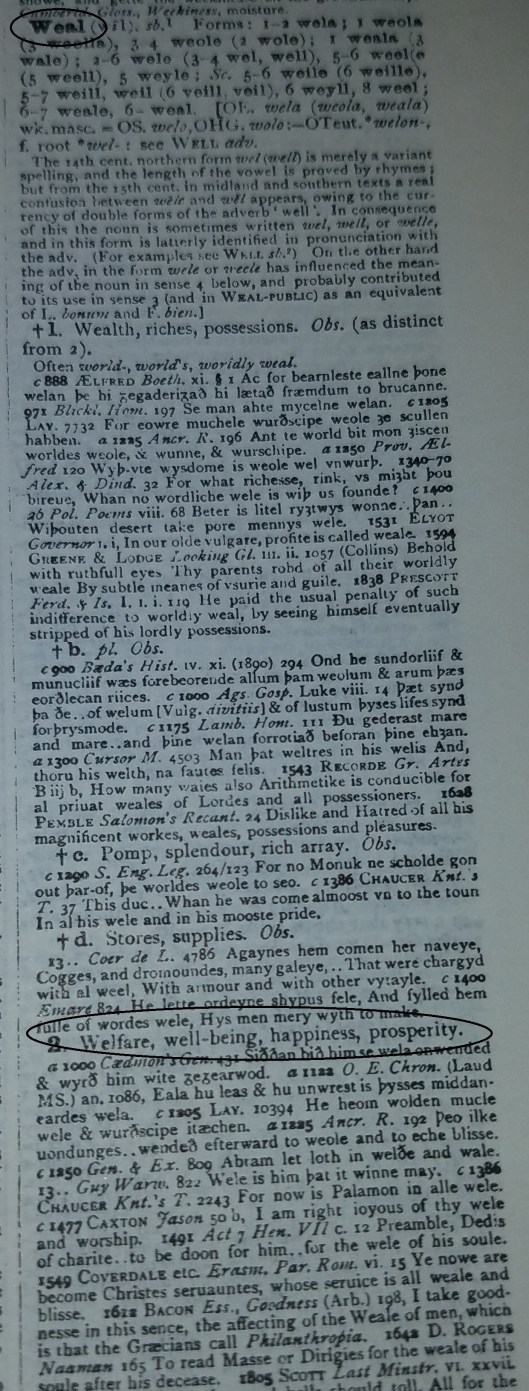
My notes: This devotion begins referencing “the most eminent grace.” Just as Spurgeon’s audience had a better idea of the sacraments of the Church, they had a grasp of a multitude of “Graces” God grants to the Church, the most preeminent one being fully assured of faith (salvation).  We have simplified — perhaps to our loss — this concept of “graces.” I was taught early in my Christian walk that grace was “unmerited favor,” which, of course, it is.  The Oxford English Dictionary, however, has over two full pages dedicated to the word “Grace.”  Grace, like redemption, and like the infinite God that grants grace, has richness and depth beyond our comprehension.

Evening, July 25

Evening, July 25, edited from Spurgeon’s Morning and Evening

“In their affliction they will earnestly seek Me.” — Hosea 5:15

Loss and adversity are frequently the means which the great Shepherd uses to fetch home his wandering sheep; like fierce dogs they worry the wanderers back to the fold. There is no making lions tame if they are too well fed; they must be weakened down from their great strength, and their appetites must be curbed, and then they will submit to the lion tamer’s hand; likewise we have often seen the Christian rendered obedient to the Lord’s will by scarceness of bread and hard labor. When rich and increased in possessions many believers carry their heads much too loftily, and speak quite boastfully. Like David, they flatter themselves, “My mountain stands fast; I shall never be moved.” When the Christian grows wealthy, has a good reputation, has good health, and a happy family, he too often invites Mr. Self Security to feast at his table, and then —  if he is a true child of God — there is a rod being prepared for him. Wait awhile, and it may be you will see his foundation melt away as a dream. There goes a portion of his estate–how soon the land and houses change hands. That debt, that dishonored bill–how fast his losses roll in, where will they end? It is a fortunate sign of spiritual life if when these embarrassments occur one after another he begins to be distressed about his backsliding, and turns himself back to his God. Blessed are the waves that wash the mariner upon the rock of salvation! Losses in business are often conducive to our soul’s enriching. If the Christian will not come to the Lord with full hands, he shall come empty. If God, in his grace, finds no other means of making us honor him among men, he will cast us into the deep; if we fail to honor him on the pinnacle of riches, he will bring us into the valley of poverty. But don’t grow faint, heir of sorrow, when you are in this way rebuked; rather, recognize the loving hand which disciplines, and say, “I will arise, and go to my Father.”

Morning, July 25

Morning, July 25, edited from Spurgeon’s Morning and Evening

” And he left his garment in her hand and fled, and went outside.” — Genesis 39:12

In contending with certain sins there remains no method of victory but by flight. The ancient naturalists wrote of basilisks, whose eyes transfixed their victims and rendered them easy prey; even so, the mere gaze of wickedness puts us in solemn danger. He who desires to be safe from acts of evil must hurry away from occasions of it. A covenant must be made with our eyes not even to look upon the cause of temptation, for such sins only need a spark to begin with and a blaze follows in an instant. Who would foolishly enter the leper’s prison and sleep amid its horrible infection? Only one who desires to be leprous himself would thus risk contagion. If the sailor knew how to avoid a storm, he would do anything rather than run the risk of weathering it. Cautious pilots have no desire to see how near the sandbar they can sail, or how often they may touch a rock without springing a leak; their aim is to keep as nearly as possible in the center of a safe channel.

This day I may be exposed to great peril; let me have the serpent’s wisdom to keep out of it and avoid it. The wings of a dove may be of more use to me today than the jaws of a lion. It is true I may be an apparent loser by declining evil company, but I’d be better off leaving my cloak than losing my character; it is not necessary that I should be rich, but it is imperative upon me to be pure. No ties of friendship, no chains of beauty, no flashing of talent, no attacks of ridicule must turn me from the wise resolution to flee from sin. I am to resist the devil and he will flee from me; but the lusts of the flesh, I must flee, or they will surely overcome me. Oh God of holiness preserve your Josephs, that an enchantress not seduce them with her wicked suggestions. May the terrible trinity of the world, the flesh, and the devil, never overcome us!

My notes:  Jesus said, “Be wise as serpents and harmless as doves,” and many of us have seen how a snake instantly flees danger. So should we.   On another note, Spurgeon used the name “Madam Bubble” from Bunyan’s Pilgrim’s Progress, one of the most published books but rarely read these days; I’ve changed her name to simply, “enchantress” for clarity among today’s readers. The basilisk, a mythical reptile that can kill with a gaze, may be familiar to readers of Harry Potter, so I’ve kept that term.  Harry Potter books outsell Pilgrim’s Progress today, I assume (with a bit of sadness).

temp

Evening, July 24

Evening, July 24, edited from Spurgeon’s Morning and Evening

“His camp is very great.” — Joel 2:11

Consider, my soul, the mightiness of the Lord who is your glory and security. He is a man of war, Jehovah is his name. All the forces of heaven are at his beck and call, legions wait at his door, cherubim and seraphim; watchers and holy ones, principalities and powers, are all attentive to his will. If our eyes were not blinded by the disease of our human nature, we should see horses of fire and chariots of fire surrounding the Lord’s cherished. The powers of nature are all subject to the absolute control of the Creator: stormy wind and cyclone, lightning and rain, and snow, and hail, and the soft dew and cheering sunshine, come and go at his mandate. The bands of Orion he looses, and binds the sweet influences of the Pleiades. Earth, sea, and air, and the places under the earth, are the quarters for Jehovah’s great armies; space is his camping ground, light is his banner, and flame is his sword. When he goes out to war, famine ravages the land, pestilence strikes the nations, hurricanes sweep the sea, tornadoes shake the mountains, and earthquakes make the solid world to tremble. As for living creatures, they all bow to his dominion, and from the great fish which swallowed the prophet, down to “all manner of flies,” which plagued the field of Zoan, all are his servants, and like the grasshopper, the caterpillar, and the locust, are squadrons of his great army, for his camp is very great. My soul, see to it that you are at peace with this mighty King: yes, even more, be sure to enlist under his banner, for to war against him is madness, and to serve him is glorious. Jesus, Immanuel, God with us, is ready to receive recruits for the army of the Lord; if I am not already enlisted let me go to him lest I sleep, and beg to be accepted through his merit; and if I am already, as I hope I am, a soldier of the cross, let me be of good courage; for the enemy is powerless compared with my Lord, whose camp is very great.

Morning, July 24

Morning, July 24, edited from Spurgeon’s Morning and Evening

“Stand still, and see the salvation of the Lord.” — Exodus 14:13

These words contain God’s command to the believer when he is subjected to great trouble and brought into extraordinary difficulties. He cannot retreat; he cannot go forward; he is blocked on the right hand and on the left; what is he now to do? The Master’s word to him is, “Stand still.” It will be well for him if at such times he listens only to his Master’s word, for other and evil advisers come with their suggestions. Despair whispers, “Lie down and die; give it all up.” But God would have us adopt cheerful courage, and even in our worst times, rejoice in his love and faithfulness. Cowardice says, “Retreat; go back to the world’s way of action; you cannot play the Christian’s part, it is too difficult. Relinquish your principles.” But, however much Satan may urge this course upon you, you cannot follow it if you are a child of God. His divine mandate has called you to go from strength to strength, and so you shall, and neither death nor hell shall turn you from your course. What, if for a while you are called to stand still, but this is only to renew your strength for some greater progress in due time. Hastiness cries, “Do something. Stir yourself; to stand still and wait, is sheer laziness.” We think we must be doing something at once — instead of looking to the Lord, who will not only do something but will do everything. Presumption boasts, “If the sea lies before you, march into it and expect a miracle.” But Faith listens neither to Presumption, nor to Despair, nor to Cowardice, nor to Hastiness, but it hears God say, “Stand still,” and immovable as a rock it stands. “Stand still.” Keep the posture of an upright man, ready for action, expecting further orders, cheerfully and patiently awaiting the directing voice; and it will not be long before God shall say to you, as distinctly as Moses said it to the people of Israel, “Go forward.”

Evening, July 23

Evening, July 23, edited from Spurgeon’s Morning and Evening

“And the blood of Jesus His Son cleanses us from all sin.” — 1 John 1:7

“Cleanses,” says the text — not “shall cleanse.” There are millions who think that on their deathbed they may look forward to cry out for pardon. Oh! how infinitely better to have cleansing now than to depend on the remote possibility of forgiveness when I come to die. Some imagine that a sense of pardon is an attainment only obtainable after many years of Christian experience. But forgiveness of sin is a present thing — a privilege for this day, a joy for this very hour. The moment a sinner trusts Jesus he is fully forgiven. The text, being written in the present tense, also indicates continuance; it was “cleansed” yesterday, it is “cleansed” today, it will be “cleansed” tomorrow.  It will be always this way with you, Christian, until you cross the river; any and every hour you may come to this fountain, for it cleanses still. Notice, likewise, the completeness of the cleansing, “The blood of Jesus Christ his Son cleanses us from all sin”–not only from sin, but “from all sin.” Reader, I cannot tell you the exceeding sweetness of this word, but I pray God the Holy Spirit will give you a taste of it. Numerous are our sins against God. Whether the bill be tiny or enormous, the same settlement can discharge one as the other. The blood of Jesus Christ is as blessed and divine a payment for the transgressions of  a blaspheming Peter as for the shortcomings of a loving John; our iniquity is gone, all gone at once, and all gone forever. Blessed completion! What a sweet theme to dwell upon as one lays himself down to sleep:

“Sins against a holy God;

Sins against his righteous laws;

Sins against his love, his blood;

Sins against his name and cause;

Sins immense as is the sea-

From them all he cleanses me.”

My notes:  John Mellencamp was quoted in an AARP article:  “I intend to make my ending good. I’m hoping it’s one of those long, lingering deathbed conversions. A lot of people go, ‘Oh, I hope I just die quick.’ Not me. I need time to put things right.” 

I could spend a lot of time explaining why that’s not the attitude to have towards eternity…


Morning, July 23

Morning, July 23, edited from Spurgeon’s Morning and Evening

“You too were as one of them.” –Obadiah 1:11

Brotherly kindness was owed to Israel from Edom in Israel’s time of need, but instead of offering help, the men of Esau made common cause with Israel’s enemies. Special stress in the sentence before us is laid upon the word You; as when Caesar cried out to Brutus, “and you, Brutus?” A bad action may be all the worse, because of the person who has committed it. When we sin, who are the chosen favorites of heaven, we sin with an emphasis; ours is an offence to be called out, because we are so especially favored. If an angel should lay his hand upon us when we are doing evil, he doesn’t need to use any other rebuke than the question, “What, you? What are you doing here?” Much forgiven, much delivered, much instructed, much enriched, much blessed; shall we dare to put forth our hand to evil? God forbid!

A few minutes of confession may be beneficial to you, gentle reader, this morning. Have you never behaved as the wicked? At an evening party certain men laughed at an immoral joke, and the joke was not offensive to you; you too were as one of them. When criticisms were spoken concerning the ways of God, you were bashfully silent; and so, to onlookers, you too were as one of them. When unbelievers were negotiating in the market, and driving unjust transactions, were you too as one of them? When they were pursuing luxurious things like a hunter, were you not as greedy as they were? Could any difference be discerned between you and them? Is there any difference? Is this uncomfortably close to your behavior?  Be honest with your own soul, and make sure that you are a new creature in Christ Jesus; but when you’ve made this sure, still walk carefully, unless any should again be able to say, “you too were as one of them.” You wouldn’t want to share their eternal destiny, why then be like them here? Don’t participate in their covert ways, or you will participate in their ruin. Side with the humble people of God, and not with the world.

An additional note:  When I was pondering this driving into work this morning, I wondered if Spurgeon would have added a comment on the manner in which  drivers sporting Christian slogans on their cars “interact” with other drivers…

Evening, July 22

Evening, July 22, edited from Spurgeon’s Morning and Evening

“Behold the man!” –John 19:5

If there is one place where our Lord Jesus most fully becomes the joy and comfort of his people, it is where he plunged deepest into the depths of woe and misery. Come close, you forgiven ones, and behold the man in the garden of Gethsemane; behold his heart so brimming with love that he cannot hold it in–so full of sorrow that it must find some release. Behold the bloody sweat as it drips from every pore of his body, and falls upon the ground. Behold the man as they drive the nails into his hands and feet. Look up, repenting sinners, and see the sorrowful image of your suffering Lord. Mark him, as the ruby drops hang on the thorns of his crown, and adorn with priceless gems the diadem of the King of Misery. Behold the man when all his joints are dislocated, and he is poured out like water and brought into the dust of death; God has forsaken him, and hell engulfs him. Behold and see, was there ever sorrow like the sorrow that is done to him? All who pass by draw near and look upon this spectacle of grief, unique, unparalleled, a wonder to men and angels, a phenomenon unmatched. Behold the Emperor of Woe who had no equal or rival in his agony! Gaze upon him, you mourners, for if there is not reassurance in a crucified Christ there is no joy in earth or heaven. If there isn’t hope in the ransom price of his blood, the voices of heaven have no joy, and the right hand of God shall never know pleasures. We have only to sit more continually at the foot of the cross to be less troubled with our doubts and woes. We have only to see his sorrows, and we shall be ashamed to mention our sorrows. We have only to gaze into his wounds and heal our own. If we would live rightly it must be by the contemplation of his death; if we would rise to dignity, it must be by considering his humiliation and his sorrow.

Morning, July 22

Morning, July 22, edited from Spurgeon’s Morning and Evening

“I am married to you.” — Jeremiah 3:14

Christ Jesus is joined to his people in the marriage union. In love he joined in engagement with his Church as a pure virgin, long before she fell under the yoke of bondage. Full of passion and affection he toiled, like Jacob for Rachel, until the whole of her dowry had been paid, and now, having sought her by his Spirit, and brought her to know and love him, he awaits the glorious hour when their mutual bliss shall be consummated at the marriage supper of the Lamb. The glorious Bridegroom has not yet presented his betrothed, perfected and complete, before the Majesty of heaven; she has not yet actually entered upon the enjoyment of her position as his wife and queen; she is still yet a wanderer in a world of woe, a dweller in tents outside of the City; but she is even now the bride, the spouse of Jesus, dear to his heart, precious in his sight, written on his hands, and united with his person. On earth he applies towards her all the affectionate support of Husband. He makes rich provision for her needs, pays all her debts, allows her to assume his name, and to share in all his wealth. Nor will he ever act otherwise to her. He will never mention the word divorce, for “He hates divorce.” Death must sever the matrimonial tie between the most loving people, but it cannot break the links of this immortal marriage. In heaven they neither marry nor are given in marriage, but are like angels in heaven; yet there is this one marvelous exception to the rule, for in Heaven Christ and his Church shall celebrate their joyous marriage day. This relationship, since it is more lasting, so is more intimate than earthly wedlock. However so pure and fervent the love of a husband is here, it is but a faint picture of the flame which burns in the heart of Jesus. Surpassing all human union is that mystical cleaving to the Church, for which Christ left his Father, and became one flesh with her.

Evening, July 21

Evening, July 21, edited from Spurgeon’s Morning and Evening

“Why am I walking around in tears?” — Psalm 42:9

Can you answer this, believer? Can you find any reason why you are mourning so often instead of rejoicing? Why yield to gloomy expectations? Who told you that the night would never end in day? Who told you that the sea of circumstances would ebb out till there should be nothing left but many miles of the mud of horrible poverty? Who told you that the winter of your discontent would proceed from frost to frost, from snow, and ice, and hail, to deeper snow, and yet more heavy storms of despair? Don’t you know that day follows night, that flood comes after ebb, that spring and summer succeed winter? Then hope! Forever hope! For God doesn’t fail you! Don’t you know that your God loves you in the midst of all this? Mountains, even when hidden in darkness, are as real as in day, and God’s love is as true to you now as it was in your brightest moments. No father disciplines forever: your Lord hates the rod as much as you do; he only cares to use it for that same reason that should make you willing to receive it, namely, that it works for your lasting good. You shall yet climb Jacob’s ladder with the angels, and behold him who sits at the top of it–your covenant God. You shall still, amidst the splendors of eternity, forget the trials of time, or only remember them to bless the God who led you through them, and fashioned your lasting good by them. Come, sing in the midst of tribulation. Rejoice even while passing through the furnace. Make the wilderness to blossom like the rose! Cause the desert to ring with your triumphing joy, for these limited afflictions will soon be over, and then  — “forever with the Lord” — your happiness shall never fade.

“Faint not nor fear, his arms are near,

He changeth not, and thou art dear;

Only believe and thou shalt see,

That Christ is all in all to thee.”

Morning, July 21

Morning, July 21, edited from Spurgeon’s Morning and Evening

“She has shaken her head behind you, the daughter of Jerusalem!”– Isaiah 37:22

Reassured by the Word of the Lord, the poor frightened citizens of Zion grew bold, and shook their heads at Sennacherib’s boastful threats. Strong faith enables the servants of God to look with calm contempt upon their most arrogant foes. We know that our enemies are attempting the impossible. They seek to destroy our eternal life, which cannot die while Jesus lives; they seek to overthrow the citadel, against which the gates of hell shall not prevail. Like mules they kick against the prods to their own injury, and rush upon the spikes of Jehovah’s shield to their own hurt.

We know their weakness. What are they but men? And what is man but a worm? They roar and swell like waves of the sea, but their shameful acts end up as foam. When the Lord arises, they shall fly as straw before the wind, and be consumed as dry branches aflame. Their utter powerlessness to do damage to the cause of God and his truth may make the weakest soldiers in Zion’s ranks ridicule and mock them.

Above all, we know that the Most High is with us, and when he prepares himself for battle, where are his enemies? If he comes forth from his place, the broken shards of clay will not contend long with their Maker. His rod of iron shall shatter them into pieces like a potter’s bowl, and their very memory shall perish from the earth. Cast away all fears then; the kingdom is safe in the King’s hands. Let us shout for joy, for the Lord reigns, and his foes shall be as straw for the manure pile.

“As true as God’s own word is true;

Nor earth, nor hell, with all their crew,

Against us shall prevail.

A jest, and by-word, are they grown;

God is with us, we are his own,

Our victory cannot fail.”

Evening, July 20

Evening, July 20, edited from Spurgeon’s Morning and Evening

“But now what are you doing on the road to Egypt, to drink the waters of the Nile?” — Jeremiah 2:18

temp

By various miracles, by assorted kindnesses, by uncommon deliverances Jehovah had proved himself to be worthy of Israel’s trust. Yet they broke down the hedges with which God had enclosed them as a holy garden; they abandoned their own true and living God, and followed after false gods. Constantly did the Lord rebuke them for this infatuation, and our text contains one instance of God’s admonishing them, “But now what are you doing on the road to Egypt, to drink the waters of the muddy Nile?”–for so it may be translated. “Why you you wander far away and leave your own cool stream flowing from Lebanon? Why do you forsake Jerusalem to turn aside to Memphis and to Tahpanhes? Why are you so strangely set on mischief, that you can’t be content with the good and healthy, but would follow after those things evil and deceitful?” Is there not here a word of clear instruction and warning to the Christian? Oh, true believer, called by grace and washed in the precious blood of Jesus, you have tasted of better drink than the muddy river of this world’s pleasure can give you; you’ve had fellowship with Christ; you’ve obtained the joy of seeing Jesus, and leaning your head upon his chest. Do the trivialities, the songs, the respect, the revelry of this earth bring contentment after that? Have you eaten the bread of angels, and now can live on corn husks? Samuel Rutherford once said, “I have tasted of Christ’s own manna, and it has made me lose my taste for the brown bread of this world’s joys.” I think it should be the same with you. If you are wandering in pursuit of the waters of Egypt, Oh, return quickly to the one living fountain; the waters of the Nile may be sweet to the Egyptians, but they will only taste bitter to you. What do you have to do with them? Jesus asks you this question this evening–what will you answer him?


Morning, July 20

Morning, July 20, edited from Spurgeon’s Morning and Evening

“A pledge of our inheritance.” — Ephesians 1:14

Oh, what enlightenment, what joy, what comfort, what happiness of heart is experienced by that man who has learned to feed on Jesus, and on Jesus alone. However, the realization we have of Christ’s value is, in this life, imperfect at best. As an old writer says, “Tis but a taste!” We have tasted “that the Lord is gracious,” but we do not yet know how good and gracious he is, although what we know of his sweetness makes us long for more. We have enjoyed the first fruits of the Spirit, and they have made us hungry and thirsty for the richness of the heavenly vintage. We cry within ourselves, waiting for our adoption. Here we are like Israel in the wilderness, who had but one cluster of grapes from the valley of Eshcol; there we shall be in the whole vineyard. Here we see the manna falling in small portions, like coriander seed, but there we shall eat the bread of heaven and the rich food of the kingdom. We are just beginners now in spiritual education; for although we have learned the first letters of the alphabet, we cannot read words yet, much less can we put sentences together; but as one says, “He that has been in heaven only five minutes, knows more than the general assembly of believers on earth.” We have many unfulfilled desires at present, but soon every wish shall be satisfied; and all our strength shall find the sweetest employment in that eternal world of joy. Oh Christian, we wait for heaven for a few years. Within a very little time you shall be rid of all your trials and your troubles. Your eyes, now filled with tears, shall weep no longer. You shall gaze in indescribable delight upon the splendor of him who sits upon the throne. And even, you shall sit upon his throne. The triumph of his glory shall be shared by you; his crown, his joy, his paradise, these shall be yours, and you shall be a joint heir with him who is the heir of all things.

temp

Evening, July 19

Evening, July 19, edited from Spurgeon’s Morning and Evening

“A battered reed he will not break off, and a smoldering wick he will not put out.” — Matthew 12:20

temp

What is weaker than a bruised and battered reed or a smoking wick? As to the reed that grows in the fen or marsh, let only the wild duck land upon it, and it snaps; just let a man’s foot brush against it, and it is bruised and broken; every wind that flutters across the river moves it back and forth. You can conceive of nothing more frail or brittle, or whose existence is more in jeopardy, than a battered reed. Then look at the smoking wick–what is it? It has a spark within it, it is true, but it is almost smothered; an infant’s breath might blow it out; nothing has a more precarious existence than its flame. Weak things are described here, yet Jesus says of them, “The smoking wick I will not quench; the battered reed I will not break.” Some of God’s children are made strong to do mighty works for him; God has his Samsons here and there who can pull up Gaza’s gates, and carry them to the top of the hill; he has a few mighty who are lion-like men, but the majority of his people are a timid, trembling race. They are like starlings, frightened at every passerby; a fearful little flock. If temptation comes, they are taken like birds in a trap; if trial threatens, they are ready to faint; their fragile skiff is tossed up and down by every wave, they drift along like a sea bird on the crest of the breakers–weak things, without strength, without wisdom, without foresight. Yet, weak as they are, and even because they are so weak, they have this promise made particularly to them. Here lies grace and graciousness! Here lies love and lovingkindness! How it reveals to us the compassion of Jesus–so gentle, tender, considerate! We never need to shrink back from his touch. We never need to fear a harsh word from him; though he might well reprimand us for our weakness, he rebukes not. Battered reeds shall not be struck by him, and the smoking wick will receive no smothering frowns.

Morning, July 19

Morning, July 19, edited from Spurgeon’s Morning and Evening

“You said, ‘Behold, the Lord our God has shown us His glory and His greatness.” — Deuteronomy 5:24

God’s great design in all his works is the revelation of his own glory. Any aim less than this would be unworthy of himself. But how shall the glory of God be revealed to such fallen creatures as we are? Man’s vision is rarely focused on God; he has one eye towards his own uprightness, has too high an estimate of his own powers, and so is not qualified to behold the glory of the Lord. It is clear, then, that self  must stand out of the way, that there may be room for God to be exalted; and this is the reason why he brings his people often into storms and difficulties, that, being made conscious of their own foolishness and weakness, they may be fitted to behold the majesty of God when he comes forth to work their deliverance. The person whose life is one even and smooth path will see only a little of the glory of the Lord, for he has few instances of humility, and so is unfit for being filled with the revelation of God. Those who navigate little streams and shallow creeks, know but little of the God of hurricanes; but they who “do business in great waters,” these see his “wonders in the deep.” Among the huge Atlantic-sized waves of loss, sorrow, poverty, temptation, and criticism, we learn the power of Jehovah, because we feel the smallness of man. Thank God, then, if you have been led down a rough road: it is this which has given you your experience of God’s greatness and lovingkindness. Your troubles have enriched you with a wealth of knowledge to be gained by no other means: your trials have been the cleft of the rock in which Jehovah has set you, as he did his servant Moses, that you might behold his glory as it passed by. Praise God that you have not been left to the darkness and ignorance which continued prosperity might have involved, but that in the great fight of affliction, you have been granted the capacity for the shining display of his glory in his wonderful dealings with you.


Evening, July 18

Evening, July 18, edited from Spurgeon’s Morning and Evening

“They do not crowd each other, They march everyone in his path.”
Joel 2:8

Locusts always keep their rank, and although their number is very great, they do not crowd upon each other, lest they throw their columns into confusion. This remarkable fact in natural history shows how thoroughly the Lord has infused the spirit of order into his universe, since the smallest animated creatures are as much controlled by it as are the orbiting planets or the heavenly messengers. It would be wise for believers to be ruled by the same influence in all their spiritual life. In their Christian giftings no one virtue should usurp the domain of another, or consume the life of the rest for its own support. Affection must not smother honesty, courage must not elbow weakness out of the field, modesty must not jostle energy, and patience must not slaughter resolution. So it is with our duties; one must not interfere with another; public usefulness must not impair private devotion; church work must not push family worship into a corner. It is deficient to offer God one responsibility stained with the blood of another. Each thing is beautiful in its season, but not otherwise. It was to the Pharisee that Jesus said, “This you should have done, and not to have left the other undone.” The same rule applies to our personal position, we must take care to know our place, take it, and keep to it. We must minister as the Spirit has given us ability, and not intrude upon our fellow servant’s domain. Our Lord Jesus taught us not to covet  high positions, but to be willing to be the least among the brethren. Rather than have an envious, ambitious spirit, let us feel the force of the Master’s command, and do as he bids us, keeping rank with the rest of the army. Tonight let us see whether we are keeping the unity of the Spirit in the bonds of peace, and let our prayer be that, in all the churches of the Lord Jesus, peace and order may prevail.

Morning, July 18

Morning, July 18, edited from Spurgeon’s Morning and Evening

“They shall set out last by their standards.” — Numbers 2:31

The camp of Dan brought up the rear when the armies of Israel were on the march. The Danites occupied the rearmost place, but the importance of their position made no difference, since they were as truly part of the congregation as were the leading tribes; they followed the same cloud and pillar of fire; they ate of the same manna, drank of the same spiritual rock, and traveled to the same inheritance. Come, your heart, cheer up, though last and least; it is your privilege to be in the army, and to fare as they fare who lead at the forefront. Someone must be rearmost in honor and esteem, someone must do tedious work for Jesus, and why shouldn’t I?  In a poor village, among an uninformed group of laborers; or in a back street, among disrespected sinners, I will work on, and “go bring up the last with my banner.”

The Danites occupied a very useful place. Stragglers must be picked up upon the march, and lost property must be gathered from the field. Those with hearts aflame may dash forward over unexplored paths to learn fresh truth, and win more souls to Jesus; but some of a more conservative spirit may be well engaged in reminding the church of her ancient faith, and restoring her weak and struggling sons. Every position has its duties, and the slowly moving children of God will find their unique state to be one in which they may be eminently a blessing to the whole congregation.

The rear guard is a place of danger. There are enemies behind us as well as before us. Attacks may come from any quarter. We read that Amalek assailed Israel, and slaughtered some of the rearmost of them. The experienced Christian will find much work for his weapons in aiding those poor doubting, despondent, wavering souls, who are rearmost in faith, knowledge, and joy. These must not be left unassisted, and therefore it is the business of well-taught believers to bear their banners among the rearmost. I pray my soul will tenderly watch to help the rearmost this day.

Evening, July 17

Evening, July 17, edited from Spurgeon’s Morning and Evening

“Do not let one of them escape.” — 1 Kings 18:40

When the prophet Elijah had received the answer to his prayer, and the fire from heaven had consumed the sacrifice in the presence of all the people, he called upon the assembled Israelites to take the priests of Baal, and sternly cried, “Let not one of them escape.” He took them all down to the brook Kishon, and killed them there. So must it be with our sins–they are all doomed, not one must be preserved. Our dearest sin must die. Don’t spare it despite its much crying. Strike, though it be as dear as an Isaac. Strike, for God struck at sin when it was laid upon his own Son. With stern unflinching purpose must you condemn to death that sin which was once the idol of your heart. Do you ask how you are to accomplish this?

Jesus will be your power. You have grace to overcome sin given you in the covenant of grace; you have strength to win the victory in the crusade against inward lust, because Christ Jesus has promised to be with you even unto the end. If you would triumph over darkness, set yourself in the presence of the Sun of Righteousness. There is no place so well suited for the discovery of sin, and recovery from its power and guilt, than as the immediate presence of God. Job never knew how to get rid of sin half so well as he did when his eye of faith rested upon God, and then he loathed himself, and repented in dust and ashes. The fine gold of the Christian is often becoming tarnished. We need the holy fire to consume the dross. Let us run to our God, he is a consuming fire; he will not consume our spirit, but our sins. Let the goodness of God stimulate us to a sacred jealousy, and to a holy revenge against those iniquities which are hateful in his sight. Go forth to battle with Amalek, in his strength, and utterly destroy the accursed troop: let not one of them escape.

Morning, July 17

Morning, July 17, edited from Spurgeon’s Morning and Evening

“Knowing, brethren beloved by God, His choice of you.” — 1 Thessalonians 1:4

Many people want to know their election (His choice) before they look to Christ, but they cannot learn it that way; it is only to be discovered by “looking to Jesus.” If you desire to determine your own election, in the following manner, you shall secure your heart before God. Do you feel yourself to be a lost, guilty sinner? Go without delay to the cross of Christ, and tell Jesus so, and tell him that you have read in the Bible, “And the one who comes to Me I will certainly not cast out.” Tell him that he has said, “It is a trustworthy statement, deserving full acceptance, that Christ Jesus came into the world to save sinners.” Look to Jesus and believe on him, and you shall make proof of your election directly, for so surely as you believe, you are elect. If you will give yourself wholly up to Christ and trust him, then you are one of God’s chosen ones; but if you stop and say, “I want to know first whether I am elect,” you don’t know what you ask. Go to Jesus, however guilty, just as you are. Leave all questions about election alone. Go straight to Christ and hide in his wounds, and you shall know your election. The assurance of the Holy Spirit shall be given to you, so that you shall be able to say, “I know whom I have believed and I am convinced that He is able to guard what I have entrusted to Him until that day.” Christ was at the eternal council: He can tell you whether you were chosen or not, but you cannot find it out in any other way. Go and put your trust in him, and his answer will be, ” I have loved you with an everlasting love; therefore, I have drawn you with lovingkindness.” There will be no doubt about his having chosen you, when you have chosen him.

“Sons we are through God’s election,

Who in Jesus Christ believe.”


My notes:  It’s obvious from the text the influence Calvinism had in the general population in the 1800s.  The closest I’ve heard in my life is, “The way and time I’m going to die is predetermined, so I’m going to live (party, drive fast, overindulge) the way I want. You die when you die.”  

You can read the above devotional using the word “selection,” or “choice.” The Greek word used for choice is very similar to the word used for …  “Word.”  Logos.  In the NFL draft players are chosen based on their attributes and attitudes, by men who have a rough idea of those things, and who have predetermined their decision, which isn’t final, however, until they give the word.  God, being both eternal (timeless) and omniscient (all-knowing) can make an exact determination for those of the “elect,” those Jesus said the Father “chose” for him. “For those whom He foreknew, He also predestined to become conformed to the image of His Son, so that He would be the firstborn among many brethren.”

The Theological Dictionary Of The New Testament (Little Kittel) points out that the term “election” is often addressing a community, not the individual.

“In general the election of individuals occurs in the context of the election of the community. Those who pray (cf. Ps. 65:4) are conscious of their election, which they experience as divine grace that is renewed in the cultus [worship community]. What is said about individuals exemplifies the one concept that derives from the common heritage of faith.”

To hold to a rigid view of predestination/election is to devalue one of the cornerstone texts of our faith, “For God so loved the world, that He gave His only begotten Son, that whoever believes in Him shall not perish, but have eternal life.”

Spurgeon has it exactly right when he says, “Leave all questions about election alone.”

Evening, July 16

Evening, July 16, edited from Spurgeon’s Morning and Evening  (Note: this was a dating error, this is actually the devotional from the 15th)

“He appeared first to Mary Magdalene.” — Mark 16:9

Jesus “appeared first to Mary Magdalene,” probably not only on account of her great love and persistent quest, but because, as the context indicates, she had been a special example of Christ’s delivering power. Learn from this, that the greatness of our sin before conversion should not preclude us from being especially favored with the very highest grade of fellowship. She was one who had left all to become a constant attendant on the Savior. He was her first, her chief object. Many who were on Christ’s side did not take up Christ’s cross; she did. She spent her substance in relieving his wants. If we would see much of Christ, let us serve him. Tell me who they are that sit most often under the banner of his love, and drink the deepest from the cup of communion, and I am sure they will be those who give most, who serve best, and who abide closest to the sacrificial heart of their dear Lord. But notice how Christ revealed himself to this sorrowing one–by a word, “Mary.” It took but one word in his voice, and at once she knew him, and her heart declared allegiance by another word; her heart was too full to say more. That one word would naturally be the most fitting for the occasion. It implies obedience. She said, “Master.” There is no state of mind in which this confession of allegiance will be too cold. No, when your spirit glows most with the heavenly fire, then you will say, “I am your servant, you have broken my bonds.” If you can say, “Master,” if you feel that his will is your will, then you stand in a happy, holy place. He must have said, “Mary,” or else you could not have said, “Master.” See, then, from all this, how Christ honors those who honor him, how love draws our Beloved, how it needs but one word of his to turn our weeping to rejoicing, how his presence makes the heart aglow with sunshine.

Morning, July 16

Morning, July 16, edited from Spurgeon’s Morning and Evening

“They gathered manna every morning.” — Exodus 16:21

Labor to maintain a sense of your entire dependence upon the Lord’s good will and pleasure for the continuance of your richest enjoyments. Never try to live on the old manna, nor seek to find help in Egypt. All must come from Jesus, or you will be unfulfilled forever. Old anointings, old spiritual infilling will not be enough to impart new spiritual life to your spirit; your head must have fresh oil poured upon it from the golden horn of the sanctuary, or it will cease from its wonder. Today you may be atop the summit of the mount of God, but he who has put you there must keep you there, or you will sink far more speedily than you can dream. Your mountain only stands firm when he settles it in its place; if he hide his face, you will soon be troubled. If the Savior should see fit, there is not a window through which you see the light of heaven which he could not darken in an instant. Joshua commanded the sun stand still, but Jesus can shroud it in total darkness. He can withdraw the joy of your heart, the light of your eyes, and the strength of your life; in his hand you find comforts, and at his will they can depart from you. This hourly dependence our Lord has established so that we shall feel and recognize it, for he only permits us to pray for “daily bread,” and only promises that “as our days our strength shall be.” Is it not best for us that it should be so, that we may often return to his throne, and constantly be reminded of his love? Oh! how rich the grace which supplies us so continually, and doesn’t leave because of our ingratitude! The heavenly, refreshing shower never ceases, the cloud of blessing abides forever above our habitation. Oh Lord Jesus, we would bow at your feet, conscious of our utter inability to do anything without you, and in every favor which we are privileged to receive, we would adore your blessed name and acknowledge your inexhaustible love.

Evening, July 15

Evening, July 15, edited from Spurgeon’s Morning and Evening  (Note: an error was made in my day ordering; this is the July 16th devotion)

You will arise and have compassion on Zion; for it is time to be gracious to her, for the appointed time has come. Surely Your servants find pleasure in her stones and feel pity for her dust.” — Psalm 102:13-14

A selfish man in trouble is extremely hard to comfort, because the springs that are his comfort lie entirely within himself, and when he is sad all his springs are dry. But a large-hearted man full of Christian generosity, has other springs from which to supply himself with comfort beside those which lie within. He can go to his God first of all, and there find abundant help; and he can discover arguments for comfort in things relating to the world at large, to his country, and, above all, to the church. David in this Psalm was exceedingly sorrowful; he wrote, “I am like an owl of the desert. I watch, and am as a sparrow alone upon the house top.” The only way in which he could comfort himself, was in reflecting that God would arise, and have mercy upon Zion. Though he was sad, yet Zion should prosper; however low his own situation, yet Zion should arise. Christian man! Learn to comfort yourself in God’s gracious dealing towards the church. That which is so dear to your Master, should it not be dear above all else to you? Even if your way is dark, can’t you make glad your heart with the triumphs of his cross and the spread of his truth? Our own personal troubles are forgotten while we look, not only upon what God has done, and is doing for Zion, but on the glorious things he will yet do for his church. Try this prescription, believer, whenever your heart is sad and spirit is heavy: forget yourself and your little concerns, and seek the welfare and prosperity of Zion. When you bend your knee in prayer to God, don’t limit your petition to the narrow circle of your own life, even though it is taxing, but send out your longing prayers for the church’s prosperity, “Pray for the peace of Jerusalem,” and your own soul shall be refreshed.


Morning  July 15

Morning  July 15, edited from Spurgeon’s Morning and Evening

“Fire shall be kept burning continually on the altar; it is not to go out.” — Leviticus 6:13

Keep the altar of private prayer burning. This is the actual life of all devotion. The church and family prayer altars borrow their fires here, therefore let this burn well. Secret devotion is the very essence, evidence, and barometer of vital and experiential religion.

Burn here the fat of your sacrifices. Let your prayer closet seasons be, if possible, regular, frequent, and undisturbed. Effectual prayer avails much. Have you nothing to pray for? Let us suggest the Church, the ministry, your own soul, your children, your relations, your neighbors, your country, and the cause of God and truth throughout the world. Let us examine ourselves on this important matter. Do we engage with lukewarmness in private devotion? Is the fire of devotion burning dimly in our hearts? Do our feet drag heavily? If so, let us be alarmed at this sign of decay. Let us go with weeping, and ask for the Spirit of grace and of fervent requests. Let us set apart special seasons for extra prayer. For if this fire should be smothered beneath the ashes of a worldly conformity, it will dim the fire on the family altar, and lessen our influence both in the Church and in the world.


The text will also apply to the altar of the heart. This is a golden altar indeed. God loves to see the hearts of his people glowing towards himself. Let us give to God our hearts, all blazing with love, and seek his grace, that the fire may never be quenched; for it will not burn if the Lord does not keep it burning. Many foes will attempt to extinguish it; but if the unseen hand behind the wall pours the anointing oil upon it, it will blaze higher and higher. Let us use texts of Scripture as fuel for our heart’s fire, they are live coals; let us attend church, but above all, let us be often alone with Jesus.

Evening, July 14

Evening, July 14, edited from Spurgeon’s Morning and Evening

“Now after the Sabbath, as it began to dawn toward the first day of the week, Mary Magdalene and the other Mary came to look at the grave.” — Matthew 28:1

Let us learn from Mary Magdalene how to obtain fellowship with the Lord Jesus. Notice how she seeks. She sought the Savior very early in the morning. If you are satisfied to wait for Christ, and be patient in the hope of having fellowship with him at some distant season, you will never have fellowship at all; for the heart that is positioned for communion with him is a hungry and a thirsty heart. She sought him also with very great boldness. Other disciples fled from the grave, for they feared and were stunned; but Mary, it is said, “stood” at the tomb. If you would have Christ with you, seek him boldly. Let nothing hold you back. Defy the world. Press on where others flee. She sought Christ faithfully–she stood at the tomb. Some find it hard to stand by a living Savior, but she stood by a dead one. Let us seek Christ in this way, clinging to the very least thing that has to do with him, remaining faithful though all others should forsake him. Note further, she sought Jesus earnestly–she stood “weeping”. Those teardrops were as invocations that led the Savior captive, and made him come forth and show himself to her. If you desire Jesus’ presence, weep after it! If you cannot be happy unless he comes and says to you, “You are my beloved,” you will soon hear his voice. Lastly, she sought the Savior only. What did she care for angels? She turned herself back from them; her search was only for her Lord. If Christ is your one and only love, if your heart has cast out all rivals, you will not lack long for the comfort of his presence. Mary Magdalene sought accordingly because she loved much. Let us arouse ourselves to the same intensity of affection; let our heart, like Mary’s, be full of Christ, and our love, like hers, will be satisfied with nothing short of himself. Oh Lord, reveal yourself to us this evening!


Morning  July 14

Morning  July 14, edited from Spurgeon’s Morning and Evening

For if you wield your tool on it, you will profane it” — Exodus 20:25

God’s altar was to be built of uncut stones, that no trace of human skill or labor might be seen upon it. Human wisdom delights to trim and arrange the doctrines of the cross into a system more artificial and friendlier with the corrupt tastes of fallen nature; instead, however, of improving the gospel, secular wisdom pollutes it, until it becomes another gospel, and not the truth of God at all. All alterations and amendments of the Lord’s own Word are desecrations and corruptions. The proud heart of man is very eager to have a hand in the justification of the soul before God; processes of preparing for Christ are dreamed up, self-depreciating and sorrowing are trusted in, good works are praised, natural ability is highly promoted, and by every method the attempt is made to utilize human tools upon the divine altar. It only if sinners would remember that, far from perfecting the Savior’s work, their self-confidence only pollutes and dishonors it. The Lord alone must be exalted in the work of atonement, and not a single mark of man’s chisel or hammer will be endured. There is an inherent blasphemy in seeking to add to what Christ Jesus in His dying moments declared to be finished, or to improve that in which the Lord Jehovah finds perfect satisfaction. Trembling sinner, cast away your tools, and fall upon your knees in humility and prayer; and accept the Lord Jesus to be the altar of your atonement, and rest in him alone.

Many professing faith should take warning from this morning’s text as to the doctrines which they believe. There is among Christians far too much inclination to line up and reconcile the truths of God’s revelation to this world’s philosophies. This is a form of irreverence and unbelief; let us combat it, and receive the truth as it is written; rejoicing that the doctrines of the Word are uncut stones, and so are the exact fit to build an altar for the Lord.

Evening, July 13

Evening, July 13, edited from Spurgeon’s Morning and Evening

“When I cry out to You, then my enemies will turn back; this I know, because God is for me.” — Psalm 56:9

It is impossible for any human speech to express the full meaning of this delightful phrase, “God is for me.” He was “for us” before the worlds were made; he was “for us,” or he would not have given his much beloved son; he was “for us” when he struck the Only-begotten, and laid the full weight of his wrath upon him–he was “for us,” though he was against him; he was “for us,” when we were ruined in the fall–he loved us despite all; he was “for us,” when we were rebels against him, and with a dismissive  hand were bidding him defiance; he was “for us,” or he would not have brought us humbly to seek his face. He has been “for us” in many struggles; we have been summoned to encounter all sorts of dangers; we have been assailed by temptations from outside and inside–how could we have remained unharmed up to this point if he had not been “for us”? He is “for us,” with all the infinity of his being; with all the omnipotence of his love; with all the infallibility of his wisdom; arrayed in all his divine attributes, he is “for us,”–eternally and unchangeably “for us”; “for us” when the blue skies shall be rolled up like a worn-out jacket; “for us” throughout eternity. And because he is “for us,” the voice of prayer will always ensure his help. “When I cry out to you, then my enemies will turn back.” This is no uncertain hope, but a well-grounded assurance–“this I know.” I will direct my prayer to you, and will look up for the answer, assured that it will come, and that my enemies shall be defeated, “for God is for me.” Oh believer, how happy you are, with the King of kings on your side! How safe with such a Protector! How sure your cause is plead by such an Advocate! If God be for you, who can be against you?

Morning  July 13

Morning  July 13, edited from Spurgeon’s Morning and Evening

“Do you have good reason to be angry?” — Jonah 4:9

 Anger is not always or necessarily sinful, but it has such a tendency to run wild that whenever it displays itself, we should be quick to question its character, with this inquiry, “Do you have good reason to be angry?” It may be that we can answer, “YES.” Very frequently anger is a madman’s firebomb, but sometimes it is Elijah’s fire from heaven. We choose rightly when we are angry with sin, because of the wrong which it commits against our good and gracious God; or with ourselves because we remain so foolish after so much of God’s instruction; or with others when the sole cause of anger is the evil which they do. He who isn’t angry at transgression becomes a participant in it. Sin is a detestable and hateful thing, and no renewed heart can patiently endure it. God himself is angry with the wicked every day, and it is written in His Word, “Hate evil, you who love the Lord.”

Far more frequently we must be concerned that our anger is not commendable or even justifiable, and then we must answer, “NO.” Why should we be irritated with children, agitated with coworkers, and angry with companions? Is such anger honorable to our Christian beliefs, or glorifying to God? Is it not the old evil heart seeking to gain dominion, and shouldn’t we resist it with all the might of our newborn nature? Many believers give way to their temper as though it were useless to attempt resistance; but let the believer remember that he must be a conqueror in every point, or else he cannot be crowned. If we cannot control our tempers, what has grace done for us? Someone told John Jay that grace was often grafted on a crab-stump (a twisted, gnarled stump). “Yes,” said he, “but the fruit will not be crabs.” We must not make natural tendencies an excuse for sin, but we must run to the cross and pray the Lord to crucify our tempers, and renew us in gentleness and meekness after His own image.

Evening, July 12

Evening, July 12, edited from Spurgeon’s Morning and Evening

“His heavenly kingdom.”
2 Timothy 4:18

That far city of the great King is a place of active service. Liberated spirits serve him day and night in his temple. They never cease to fulfill the good will of their King. They always “rest,” so far as ease and freedom from care is concerned; and never “rest,” in the sense of laziness or inactivity. The golden city of Jerusalem is the place of communion with all the people of God. We shall sit with Abraham, Isaac, and Jacob, in eternal fellowship. We shall hold important conversations with the noble host of the elect, all reigning with him who by his love and his powerful arm has brought them safely home. We shall not sing solos, but in chorus shall we praise our King. Heaven is a place of victory realized. Whenever, Christian, you have achieved a victory over your lusts–whenever after hard struggling, you have laid a temptation dead at your feet–you have in that hour a foretaste of the joy that awaits you when the Lord shall shortly tread Satan under your feet, and you shall find yourself more than a conqueror through him who loved you. Paradise is a place of security. When you enjoy the full assurance of faith, you have the pledge of that glorious security which shall be yours when you are a perfect citizen of the heavenly Jerusalem. Oh my sweet home, Jerusalem, you happy harbor of my soul! Thanks, even now, to him whose love has taught me to long for you; but louder thanks in eternity, when I shall possess you.

“My soul has tasted of the grapes,

And now it longs to go

Where my dear Lord his vineyard keeps

And all the clusters grow.

“Upon the true and living vine,

My famish’d soul would feast,

And banquet on the fruit divine,

An everlasting guest.”

Morning, July 12

Morning, July 12, edited from Spurgeon’s Morning and Evening

Sanctified:  Set apart, made holy

“Sanctified by God the Father.” — Jude 1

“Sanctified in Christ Jesus.” — 1 Corinthians 1:2

“Through sanctification of the Spirit.” — 1 Peter 1:2

Carefully note the union of the Three Divine Persons in all their gracious acts. How unwisely do those believers talk who make preferences in the Persons of the Trinity; who think of Jesus as if he were the embodiment of everything lovely and gracious, while the Father they regard as severely just, but destitute of kindness. Equally wrong are those who magnify the decree of the Father, and the atonement of the Son, so as to depreciate the work of the Spirit. In deeds of grace none of the Persons of the Trinity act apart from the rest. They are as united in their deeds as in their essence. In their love towards the chosen they are one, and in the actions which flow from that great central source they are still undivided.

Especially notice this in the matter of sanctification. While we are not mistaken to speak of sanctification as the work of the Spirit, still we must take care that we do not view it as if the Father and the Son had no part in it. It is correct to speak of sanctification as the work of the Father, of the Son, and of the Spirit. Still does Jehovah say, “Let us make man in our own image according to our likeness,” and thus we are “His workmanship, created in Christ Jesus for good works, which God prepared beforehand so that we would walk in them.” See the value which God sets upon real holiness, since the Three Persons in the Trinity are represented as working in concert to produce a Church without “spot, or wrinkle, or any such thing.” And you, believer, as the follower of Christ, must also set a high value on holiness–upon purity of life and godliness of conversation. Value the blood of Christ as the foundation of your hope, but never speak disparagingly of the work of the Spirit which allows you to meet the conditions for the inheritance of the saints in light. This day let us so live as to manifest the work of the Triune God in us.

Evening, July 11

Evening, July 11, edited from Spurgeon’s Morning and Evening

“Tell it to your children, and let your children tell it to their children, and their children to the next generation..” — Joel 1:3

In this simple way, by God’s grace, a living testimony for truth is always to be kept alive in the land; the beloved of the Lord are to hand down their witness for the gospel, and the covenant to their heirs, and these again to their next descendants. This is our first duty; we are to begin with the family, for he is a bad preacher who does not commence his ministry at home. The lost are to be sought by all means, and the highways and hedges are to be searched, but home has a prior claim, and it will be sorrowful to those who reverse the order of the Lord’s arrangements. To teach our children is a personal duty; we cannot delegate it to Sunday school teachers, or other friendly resources; these can assist us, but cannot deliver us from this holy obligation; surrogates and godparents are wrongful tools in this case: mothers and fathers must, like Abraham, command their households in the fear of God, and talk with their offspring concerning the wondrous works of the Most High. Parental teaching is a natural duty; who is so fit to look to the child’s well-being as those who are the authors of his actual being? To neglect the instruction of our offspring is to be worse than barbaric. Family spirituality is necessary for the nation, for the family itself, and for the church of God. By a thousand schemes all sorts of godless religion is covertly advancing in our land, and one of the most effective means for resisting its inroads is left almost neglected, namely, the instruction of children in the faith. If only parents would awaken to a sense of the importance of this matter. It is a satisfying duty to talk of Jesus to our sons and daughters, and even more so because it has often proved to be a task God favors, for God has saved the children through the parents’ prayers and counsel. May every house into which this volume shall come honor the Lord and receive his smile.


July 11, Morning

Morning, July 11, edited from Spurgeon’s Morning and Evening

“After you have suffered for a little while, the God of all grace, who called you to His eternal glory in Christ, will Himself perfect, confirm, strengthen and establish you.”
1 Peter 5:10

You have seen the rainbow, the arch of heaven as it spans the plain: glorious are its colors, and rare its hues. It is beautiful, but, sadly, it passes away, and in a moment, it is gone. The fair colors give way to the fleecy clouds, and the sky is no longer brilliant with the tints of heaven. It is not established. How can it be? A glorious show made up of transitory sun-beams and passing rain-drops, how can it abide? The graces of the Christian character must not resemble the rainbow in its transitory beauty, but, on the contrary, must be established, settled, abiding. Seek, believer, that every good thing you have may be an abiding thing. May your character not be writing upon the sand, but an inscription upon the rock! May your faith be no “baseless fabric of a vision,” but may it be built of material able to endure that terrible fire which shall consume the wood, hay, and stubble of the hypocrite. May you be rooted and grounded in love. May your convictions be deep, your love real, your desires earnest. May your whole life be so settled and established, that all the raging gusts of hell, and all the storms of earth shall never be able to remove you. But notice how this blessing of being “established in the faith” is gained. The apostle’s words point us to suffering as the means employed–“After you have have suffered a little while.” It is useless to hope that we shall be well rooted if no rough winds pass over us. Those old gnarls on the root of the oak tree, and those strange twists of the branches, all tell of the many storms that have swept over it, and they are also indicators of the depth into which the roots have forced their way. In that way the Christian is made strong, and firmly rooted by all the trials and storms of life. Don’t wither before the tempestuous winds of trial, but take comfort, believing that by their rough discipline God is fulfilling this blessing to you.

July 10, Evening

Evening, July 10, edited from Spurgeon’s Morning and Evening

“And there was evening and there was morning, one day.”
Genesis 1:5

The evening was “darkness” and the morning was “light,” and yet the two together are called by the name that is given to the light alone! This is somewhat remarkable, but it has an exact analogy in spiritual experience. In every believer there is darkness and light, and yet he is not to be named a sinner because there is sin in him, but he is to be named a saint — holy one — because he possesses some degree of holiness. This will be a very comforting thought to those who are mourning their weaknesses, and who ask, “Can I be a child of God while there is so much darkness in me?” Yes; for you, like the day, do not take your name from the evening, but from the morning; and you are spoken of in the word of God as if you were even now perfectly holy as you will be soon. You are called the child of light, though there is darkness in you still. You are named after what is the prevailing quality in the sight of God, which will one day be the only principle remaining. Notice that the evening comes first. Naturally we are darkness first in the order of time, and the gloom is often first in our despairing dread, driving us to cry out in deep humiliation, “God be merciful to me, a sinner.” Secondly, after evening comes morning; it dawns when grace overcomes nature. It is a blessed aphorism of John Bunyan, “That which is last, lasts forever.” That which is first, yields in due season to the last; but nothing comes after the last. So that though you are naturally darkness, when once you become light in the Lord, there is no evening to follow; “your sun shall no more go down.” The first day in this life is an evening and a morning; but the second day, when we shall be with God, forever, shall be a day with no evening, but one, sacred, high, eternal noon.

July 10, Morning

Morning, July 10, edited from Spurgeon’s Morning and Evening

“Fellow citizens with the holy ones.”
Ephesians 2:19

What is meant by our being citizens in heaven? It means that we are under heaven’s government. Christ the king of heaven reigns in our hearts; our daily prayer is, “Your will be done on earth as it is in heaven.” The proclamations issued from the throne of glory are freely received by us: the decrees of the Great King we cheerfully obey. Then as citizens of the New Jerusalem, we share heaven’s honors. The glory which belongs to those holy ones already in heaven  belongs to us, for we are already sons of God, already princes of imperial blood; already we wear the spotless robe of Jesus’ righteousness; already we have angels for our servants, holy ones for our companions, Christ for our Brother, God for our Father, and a crown of immortality for our reward. We share the honors of citizenship, for we have come to the general assembly and Church of the first-born whose names are written in heaven. As citizens, we have common rights to all the property of heaven. Ours are its gates of pearl and walls of chrysolite; ours the azure light of the city that needs no candle nor light of the sun; ours the river of the water of life, and the twelve manner of fruits which grow on the trees planted on the banks of it; there is nothing in heaven that doesn’t belong to us. “Things present, or things to come,” all are ours. Also as citizens of heaven we enjoy its delights. Do they there rejoice over sinners that repent, prodigals that have returned? So do we. Do they sing the glories of triumphant grace? We do the same. Do they cast their crowns at Jesus’ feet? Such honors as we have we cast there too. Are they charmed with his smile? It is not less sweet to us who dwell below. Do they look forward, waiting for his second coming? We also look and long for his appearing. If, then, since we are citizens of heaven, let our walk and actions be consistent with our high position.

Evening, July 9

Evening, July 9, edited from Spurgeon’s Morning and Evening

“God separated the light from the darkness.”– Genesis 1:4

A believer has two principles at work within him. In his natural state he was subject to one principle only, which was darkness; now light has entered, and the two principles disagree. Take careful note of the apostle Paul’s words in the seventh chapter of Romans: “For I joyfully concur with the law of God in the inner man,  but I see a different law in the members of my body, waging war against the law of my mind and making me a prisoner of the law of sin which is in my members.” How is this state of things triggered? “The Lord separated the light from the darkness.” Darkness, by itself, is quiet and undisturbed, but when the Lord sends in light, there is a conflict, for the one is in opposition to the other: a conflict which will never cease till the believer is altogether illuminated in the Lord. If there is a division within the individual Christian, there is certain to be a division without. So as soon as the Lord gives any man light, he proceeds to separate himself from the darkness around; he withdraws from a merely worldly religion outwardly ceremonial, for nothing short of the gospel of Christ will now satisfy him, and he withdraws himself from worldly fellowship and foolish entertainment, and seeks the company of the believers, for “We know that we have passed out of death into life, because we love the brethren.” The light gathers to itself, and the darkness to itself. What God has divided, let us never try to unite, but as Christ went outside the camp, bearing his reproach, so let us come out from the ungodly, and be a special people. He was holy, gentle, pure, distinguished from sinners; and, as he was, so we are to be nonconformists to the world, refusing agreement with all sin, and differing from the rest of mankind by our likeness to our Master.

Morning, July 9

Morning, July 9, edited from Spurgeon’s Morning and Evening

“Bless the Lord, O my soul,
And forget none of His benefits;”
Psalm 103:2

It is a delightful and profitable pursuit to mark the hand of God in the lives of ancient people of God, and to observe his goodness in delivering them, his mercy in pardoning them, and his faithfulness in keeping his covenant with them. But would it not be even more interesting and beneficial for us to take note of the hand of God in our own lives? Should we not look upon our own history as being at least as full of God, as full of his goodness and of his truth, as much a proof of his faithfulness and veracity, as the lives of any of the Godly who have gone before? We do our Lord an injustice when we suppose that he performed all his mighty acts, and showed himself strong for those in the early times, but doesn’t perform wonders or work with his mighty arm for the people of God who are now upon the earth. Let us review our own lives. Surely in these we may discover some happy occurrences, refreshing to ourselves and glorifying to our God. Haven’t you been delivered from evil at times? Haven’t you passed through rivers, when you were supported by the divine presence? Haven’t you walked through fires unharmed? Haven’t you had visitations from God? Haven’t you had special kindnesses? The God who gave Solomon the desire of his heart, has he never listened to you and answered your requests? That God of lavish bounty of whom David sang, “Who satisfies your mouth with good things,” has he never satisfied you with abundance? Have you never been made to lie down in green pastures? Have you never been led by the still waters? Surely the goodness of God has been the same to us as to the Godly of old. Let us then weave his mercies into a song. Let us take the pure gold of thankfulness, and the jewels of praise and make them into another crown for the head of Jesus. Let our souls give forth music as sweet and as exhilarating as came from David’s harp, while we praise the Lord whose mercy endures forever.

Evening, July 8

Evening, July 8, edited from Spurgeon’s Morning and Evening

Lead me in Your truth and teach me,
For You are the God of my salvation;
For You I wait all the day..” — Psalm 25:5

When the believer has begun with trembling feet to walk in the way of the Lord, he asks to be still led onward like a little child upheld by his parent’s helping hand, and he craves to be further instructed in the building blocks of truth. Experiential teaching is the burden of this prayer. David knew much, but he felt his ignorance, and desired to remain in the Lord’s school; four times over in two verses he applies for a scholarship in the college of grace. It would bode well for many professing believers if instead of following their own plans, and cutting out new paths of thought for themselves, they would inquire for the good old ways of God’s own truth, and beg the Holy Spirit to give them sanctified understandings and teachable spirits. “For you are the God of my salvation.” The Three-In-One Jehovah is the Author and Finisher of salvation to his people. Reader, is he the God of your salvation? Do you find in the Father’s choice of you, in the Son’s atonement, and in the Spirit’s enlivening, all the grounds of your eternal hopes? If so, you may use this as an argument for obtaining further blessings; if the Lord has ordained to save you, surely he will not refuse to instruct you in his ways. It is a happy thing when we can address the Lord with the confidence which David here shows; it gives us great power in prayer, and comfort in trial. “On you do I wait all the day.” Patience is the fair handmaid and daughter of faith; we cheerfully wait when we are certain that we shall not wait in vain. It is our duty and our privilege to wait upon the Lord in service, in worship, in expectancy, in trust all the days of our life. Our faith will be tested faith, and if it be of the true kind, it will bear continued trial without yielding. We shall not grow weary of waiting upon God if we remember how long and how graciously he once waited for us.

Morning, July 8

Morning, July 8, edited from Spurgeon’s Morning and Evening

“Please tell me where your great strength is.” — Judges 16:6

Where lies the secret strength of Faith? It lies in the food she feeds on; for Faith studies what the promise is–an outpouring of divine grace, an overflowing of the great heart of God; and Faith says, “My God could not have given this promise, except from love and grace; therefore she is quite certain his Word will be fulfilled.” Then Faith thinks, “Who gave this promise?” She at first doesn’t consider its greatness, as, “Who is the author of it?” But Faith remembers that it is God who cannot lie–God omnipotent, God unchangable; and therefore concludes that the promise must be fulfilled; forward she advances in this firm conviction. Faith remembers why the promise was given — namely, for God’s glory — and she feels perfectly sure that God’s glory is safe, that he will never stain his own coat of arms, nor mar the luster of his own crown; and consequently the promise must and will stand. Then Faith also considers the amazing work of Christ as being a clear proof of the Father’s intention to fulfil his word. “He that spared not his own Son, but freely delivered him up for us all, how shall he not with him also freely give us all things?” Moreover, Faith looks back upon the past, for battles have strengthened her, and victories have given her courage. Faith remembers that God never has failed her; nay, that he never did once fail any of his children. Faith recalls times of great peril, when deliverance came; hours of awful need, days in which her strength was found, and Faith cries, “No, I never will be led to think that he can change and leave his servant now. Before the Lord has helped me, and he will help me still.” In that way Faith views each promise in her connection with the promise-giver, and, because she does so, can with assurance say, “Surely goodness and mercy shall follow me all the days of my life!”

Evening, July 7

Evening, July 7, adapted from Spurgeon’s Morning and Evening

“When I passed by you … I said to you … ‘Live!’”  — Ezekiel 16:6

You who are saved, consider gratefully this mandate of mercy. Note the majesty of this decree of God. In our text, we perceive a sinner with nothing in him but sin, expecting nothing but wrath; but the eternal Lord passes by in his glory; he looks, he pauses, and he pronounces the solitary but royal word, “Live.” There speaks power befitting a God. Who but he could venture that way to deal with life and dispense it with a single syllable? Again, this decree is diverse. When he says “Live,” it includes many things. Here is judicial life. The sinner is ready to be condemned, but the mighty One says, “Live,” and he rises pardoned and exonerated. It is spiritual life. We didn’t know Jesus–our eyes could not see Christ, our ears could not hear his voice–Jehovah said “Live,” and we were made alive who were dead in trespasses and sins. In addition, it includes the life of glory, which is the perfection of spiritual life. “I said to you, Live:” and that word rolls on through all the years of time till death comes, and in the midst of the shadows of death, the Lord’s voice is still heard, “Live!” In the morning of the resurrection it is that same exact voice which is echoed by the arch-angel, “Live,” and as our perfected spirits rise to heaven to be blessed forever in the glory of their God, it is in the power of this same word, “Live.” Note again, that it is an irresistible mandate. Saul of Tarsus is on the road to Damascus to arrest the believers of the living God. A voice is heard from heaven and a light is seen greater than the brightness of the sun, and Saul is crying out, “Lord, what will you have me to do?”

This mandate is a mandate of free grace. When sinners are saved, it is only and solely because God will do it to magnify his free, unpurchased, unsought grace. Christians, see your position, in debt to grace; show your gratitude by serious, Christlike lives, and as God has bidden you live, see to it that you live in earnest.

Morning, July 7

Morning, July 7, slightly edited from Spurgeon’s Morning and Evening

“Brethren, pray for us.”  — 1 Thessalonians 5:25

This one morning in the year we reserved to refresh the reader’s memory upon the subject of prayer for ministers, and we do most earnestly appeal to every Christian household to grant the fervent request of the above text first uttered by an apostle and now repeated by us. Brethren, our work is solemnly momentous, involving happiness or despair to thousands; we earnestly bid men heed our words, speaking for God on eternal business, and our word is either a savor of life bringing life, or of death bringing death. A very heavy responsibility rests upon us, and it will be great and merciful if at the last we be found clear of the blood of all men. As officers in Christ’s army, we are the special target of the rage of men and demons; they watch for our stumbling, and labor to trip us in our walk. Our sacred calling involves us in temptations from which you are exempt; above all it too often draws us away from our personal enjoyment of truth into a ministerial and official consideration of it. We meet with many difficult cases, and our wisdom is challenged with confusion; we observe very sad backsliding, and our hearts are grieved; we see millions perishing, and our spirits sink. We wish to profit you by our preaching; we desire to be a blessing to your children; we long to be useful both to saints and sinners; therefore, dear friends, intercede for us with our God. Without the aid of your prayers, we will be but miserable men, but we will be happy if remembered in your supplications. You do not look to us but to our Master for spiritual blessings, and yet how many times has He given those blessings through His ministers; ask then, again and again, that we may be the earthen vessels into which the Lord may put the treasure of the gospel. We, the whole company of missionaries, ministers, counselors, and students, do in the name of Jesus beg you:

“Brethren, pray for us.”

My notes:  How often we forget to support those in prayer that are at the frontline of a spiritual war, and instead offer criticism of their tactics (“friendly fire”).

“Weal, or woe;” “We treat with souls for God on eternal business;” “Our wits are at a non plus;” “They watch for our halting:” This devotion is one full of Old English, that drove me to the Oxford English Dictionary.  I hope my interpretation meets all expectations. 

Here is the original text:  https://www.blueletterbible.org/devotionals/me/view.cfm?Date=07/07&Time=am

Here is part of the OED entry on “Weal:”

Weal


Evening, July 6

Evening, July 6, adapted from Spurgeon’s Morning and Evening

“How many are my iniquities and sins?  — Job 13:23

Have you ever really weighed and considered how great the sin of God’s people is? Think how terribly wicked is your own wrongdoing, and you will find that not only does a sin here and there tower up like one of the Alps, but that your iniquities are heaped upon each other, as in the old Greek myth of the giants who heaped Pelion upon Ossa, mountain upon mountain. What a mountain of sin there is in the life of one of the most sanctified of God’s children! Attempt to multiply this, the sin of one only, by the great assembly of the redeemed, “a number which no man can number,” and you will have some conception of the great mass of the guilt of the people for whom Jesus shed his blood. But we arrive at a more adequate idea of the magnitude of sin by the greatness of the remedy provided. It is the blood of Jesus Christ, God’s only and well-beloved Son. God’s Son! Angels cast their crowns before him! All the choral symphonies of heaven surround his glorious throne. “God over all, blessed forever. Amen.” And yet he takes upon himself the form of a servant, and is whipped and pierced, bruised and torn, and at last slain; since nothing but the blood of the incarnate Son of God could make atonement for our offences. No human mind can adequately estimate the infinite value of the divine sacrifice, for great as is the sin of God’s people, the atonement which takes it away is immeasurably greater. Therefore, the believer, even when sin rolls like a black flood, and the remembrance of the past is bitter, can yet stand before the blazing throne of the great and holy God, and cry, “Who is the one who condemns? Christ Jesus is He who died, yes, rather who was raised.” While the recollection of his sin fills him with shame and sorrow, he at the same time makes it a contrast to show the brightness of mercy–guilt is the dark night in which the fair star of divine love shines with serene splendor.

My Notes:  When I consider the great forgiveness granted me, the commandment to forgive others as I am forgiven comes to mind.  When I think of some individual that has done great wrong to me, I can see that sin against me as a pile of significant weight.  But when I consider all the wrongs I’ve done against all others (and God) laid on my account through my life, the size and weight dwarfs any one person’s offense against me. It becomes a small thing to forgive one person, when all the wrong I have done all my life is placed upon Christ, and forgiven.

Morning, July 6

Morning, July 6, slightly edited from Spurgeon’s Morning and Evening

“But he who listens to me shall live securely and will be at ease from the dread of evil.” — Proverbs 1:33

Divine love is rendered clearly visible when it shines in the midst of judgments. Beautiful is that lone star which smiles through the rifts of the thunder clouds; bright is the oasis which blooms in the wilderness of sand; so fair and so bright is love in the midst of wrath. When the Israelites provoked the Most High by their continued idolatry, he punished them by withholding both dew and rain, so that their land was visited by a severe famine; but while he did this, he took care that his own chosen ones should be secure. If all other streams are dry, yet one shall be reserved for Elijah; and when that fails, God shall still preserve for him a place of nourishment; indeed, the Lord did not have simply one “Elijah,” but he had a remnant according to the election of grace, who were hidden by groups of fifty in a cave, and though the whole land was subject to famine, yet these groups in the cave were fed, and fed from Ahab’s table too by His faithful, God-fearing steward, Obadiah. Let us from this draw the inference, that come what may, God’s people are safe. Let the solid earth convulse and shake, let the skies themselves be torn in two, yet amid the wreck of worlds the believer shall be as secure as in the calmest hour of rest. If God cannot save his people under heaven, he will save them in heaven. If the world becomes too hot to hold them, then heaven shall be the place of their reception and their safety. You be confident, when you hear of wars, and rumors of wars. Let no agitation distress you, but be quiet from the fear of evil. Whatever comes upon the earth, you, beneath the broad wings of Jehovah, shall be secure. Stay yourself upon his promise; rest in his faithfulness, and bid defiance to the blackest future, for there is nothing in it dreadful for you. Your sole concern should be to show forth to the world the blessedness of giving ear to the voice of wisdom.

Evening, July 5

Evening, July 5, adapted from Spurgeon’s Morning and Evening

“Trust in the Lord forever, for in God the Lord, we have an everlasting Rock.”  — Isaiah 26:4

Seeing that we have such a God to trust in, let us rest upon him with all our weight; let us resolve to drive out all unbelief, and endeavor to get rid of doubts and fears, which greatly spoil our tranquility; since there is no excuse for fear where God is the foundation of our trust. A loving parent would be greatly saddened if his child could not trust him; and how selfish, how unkind is our conduct when we put so little confidence in our heavenly Father who has never failed us, and who never will. It would bode well if doubting was banished from the household of God; but it is to be feared that old Unbelief is as alive nowadays as when the psalmist asked, “Has His lovingkindness ceased forever? Has His promise come to an end forever?” David had not made any exhaustive test of the mighty sword of the giant Goliath, and yet he said, “There is none like it.” He had tried it once in the hour of his youthful victory, and it had proved itself to be of the right alloy, and therefore he praised it well after; even so should we speak well of our God, there is none like him in the heaven above or the earth beneath; “’To whom then will you liken Me, that I would be his equal?’ says the Holy One.” There is no rock nearly like the rock of Jacob, our enemies themselves being judges. So far from allowing doubts to abide in our hearts, we will take the whole detestable crew, as Elijah did the prophets of Baal, and execute them over the brook; and for a stream to kill them at, we will select the sacred torrent which wells forth from our Savior’s wounded side. We have been in many trials, but we have never yet been cast where we could not find in our God all that we needed. Let us then be encouraged to trust in the Lord forever, assured that his everlasting strength will be, as it has been, our assistance and foundation.